August 21, 2026
The hidden cost of reconciling five billing systems
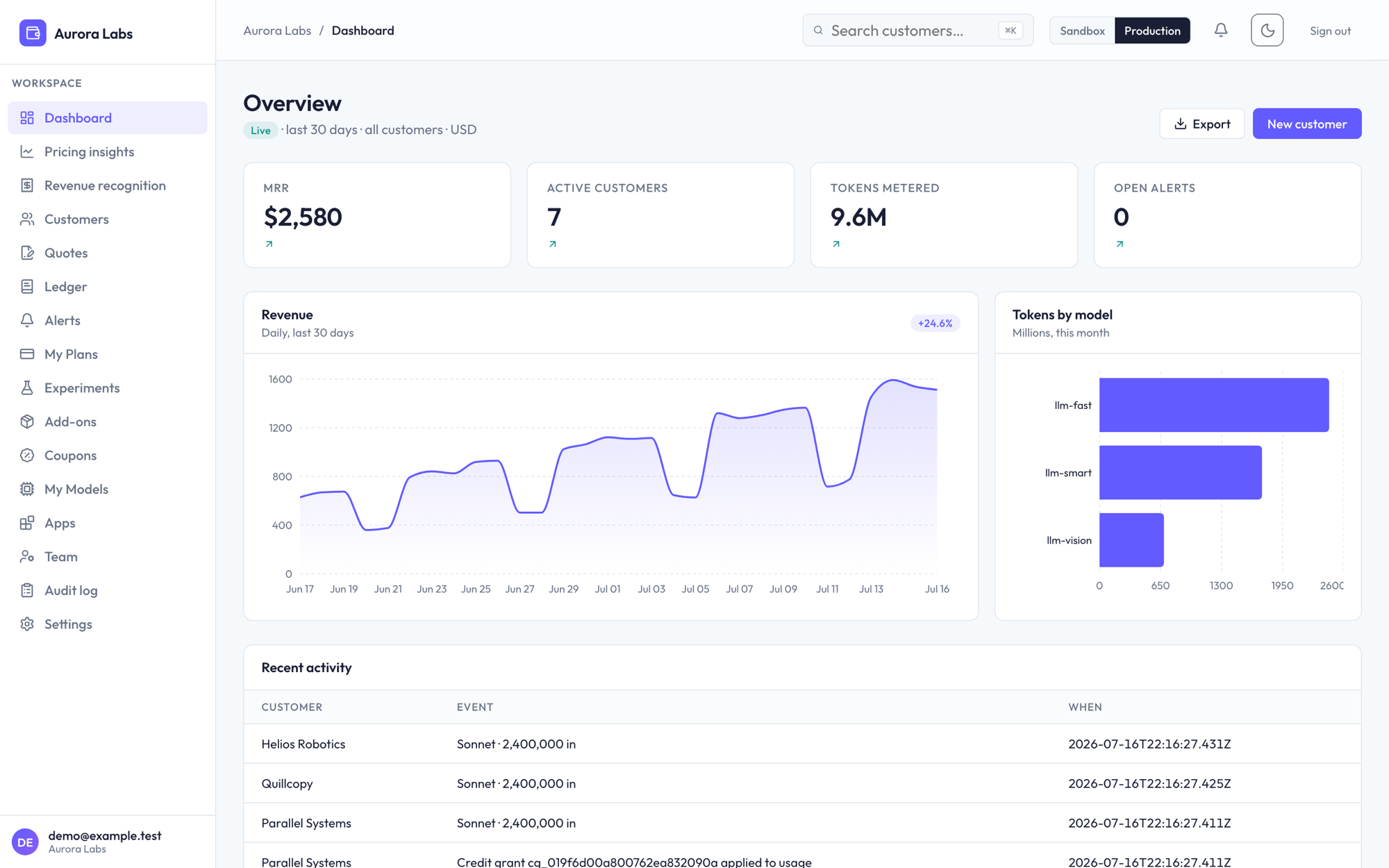
Ask a finance team how confident they are in last month's revenue number, and you'll usually get a qualified answer: "confident, once reconciliation is done." That qualifier is doing a lot of work. It means the usage-metering system, the entitlements system, the credits ledger, the invoicing system, and the reporting dashboard don't actually agree by default: someone has to make them agree, every close, by hand or by script.
Every one of those systems is a place a number can drift: a metering event double-counted, a credit applied in one system but not reflected in another, an entitlement check that used stale plan data. None of these are exotic failures. They're the ordinary cost of having five sources of truth instead of one.
Meterbox's answer is structural, not procedural: every commercial event (a metered call, a credit grant, a plan change, an invoice line) exists exactly once, in one ledger. Entitlements, revenue reporting, and invoicing are all projections of that same ledger, not separate systems that need to be kept in sync with it. There's nothing to reconcile because there was only ever one number to begin with.
This is also why period-end close is automatable rather than a monthly fire drill: the ledger already knows what happened, in order, without a human tracing five spreadsheets back to a shared truth that doesn't quite exist.
We wrote more about the principles behind this on Our Strategy. This is the first one: one source of truth, no duplicated state.